The Best Fashion Museums in Paris (And Which One to Skip)
Palais Galliera, Musée des Arts Décoratifs, Musée Yves Saint Laurent and Bourdelle: what each one actually holds, and how to plan a visit that is worth the ticket.
Paris has more garments in public collections than any other city, but they are spread across institutions that behave very differently. Some rotate constantly, some almost never display clothing at all, and one of the most famous has no permanent exhibition. Knowing which is which is the difference between an extraordinary afternoon and an expensive disappointment.
Palais Galliera: the city fashion museum
The Palais Galliera holds roughly two hundred thousand items and is the only Paris institution dedicated entirely to clothing. It sits in a nineteenth-century palace in the sixteenth arrondissement, opposite the Palais de Tokyo.
The crucial thing to understand is that it has no permanent display. Textiles cannot tolerate prolonged light exposure, so everything is shown in temporary exhibitions and then returned to storage. This frustrates visitors who arrive expecting a walk through fashion history.
The advantage is that each exhibition is built from scratch, curated properly, and frequently definitive. Check what is showing before you commit. If the subject interests you, it is the best fashion exhibition space in the world. If it does not, there is nothing else to see.
A closed Galliera between exhibitions is the single most common disappointment in fashion tourism.
Musée des Arts Décoratifs: the deep collection
Occupying the Marsan wing of the Louvre, the Musée des Arts Décoratifs holds the broader historical collection, running from eighteenth-century court dress through to contemporary couture, alongside furniture, objects and graphic design.
It is consistently less crowded than its enormous neighbour, and the fashion galleries are genuinely serious. For understanding how dress relates to interiors, manners and social structure across three centuries, this is the strongest collection in the city.
Allow two hours minimum. The building rewards slow movement.
Musée Yves Saint Laurent: the working room
At 5 Avenue Marceau, the museum occupies the actual couture house where Saint Laurent worked from 1974 to 2002. The studio has been preserved close to how he left it.
This is not a glamorous space. It is a workroom, with boards, swatches, pinned sketches and the accumulated mess of daily production. For anyone interested in how clothes are made rather than how they are marketed, it is the most instructive room in Paris.
The museum is small and can be seen thoroughly in ninety minutes. Book ahead in high season.
Musée Bourdelle: the unexpected one
The sculptor Antoine Bourdelle's studio in Montparnasse is not a fashion museum, but the Palais Galliera regularly uses it as an overflow exhibition space. Some of the most memorable fashion exhibitions of recent years have been staged among the plaster casts.
Garments shown against monumental sculpture read completely differently. If an exhibition is running there, prioritise it.
Which one to skip
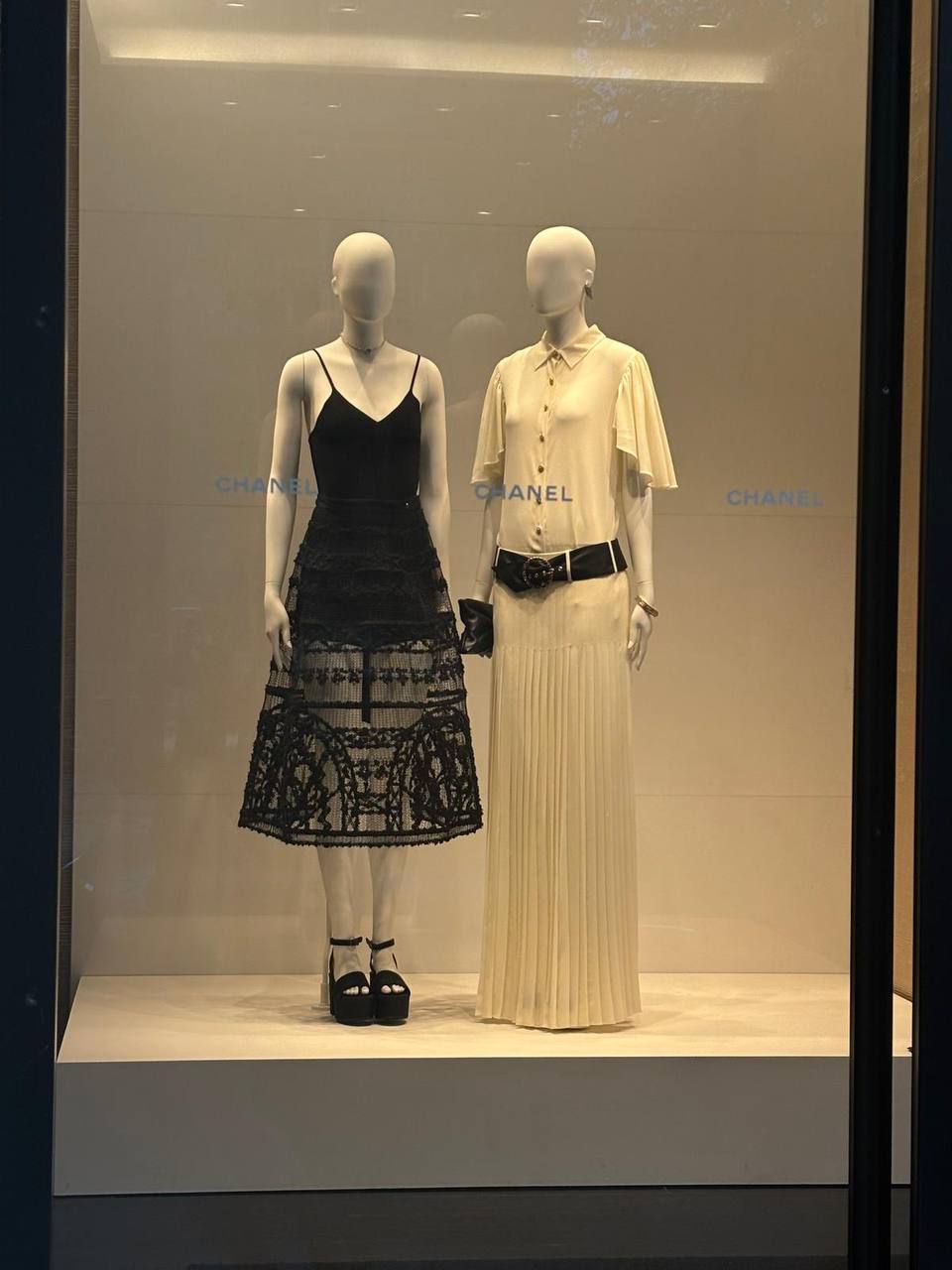
The various brand-operated exhibition spaces around the city are marketing environments rather than museums. They are free, well produced, frequently beautiful, and they will tell you nothing that the house does not want you to know.
Visit them if you are passing. Do not build a day around them.
How to sequence a museum day
Galliera and the Musée Yves Saint Laurent sit within a fifteen-minute walk of each other in the sixteenth and eighth arrondissements, which makes them the natural pairing for a single morning.
The Musée des Arts Décoratifs belongs to a different day, ideally combined with the Rue de la Paix and Place Vendôme, which are a short walk away and where the couture system began.
Seeing the city as well as the collections
Museums preserve garments, but the buildings where those garments were designed, cut and sold are still standing, unmarked, a few streets away.
That is what our fashion history walking tours in Paris are built around: the addresses themselves, explained on site by a Sorbonne-trained fashion historian, in English or French, in small groups.
Available dates are listed here.
Mademoiselle C
Author