Coco Chanel’s Paris: The Addresses That Made Her
Rue Cambon, the Ritz, the Rue du Faubourg Saint-Honoré: the real geography of Gabrielle Chanel’s Paris, and what happened at each address.
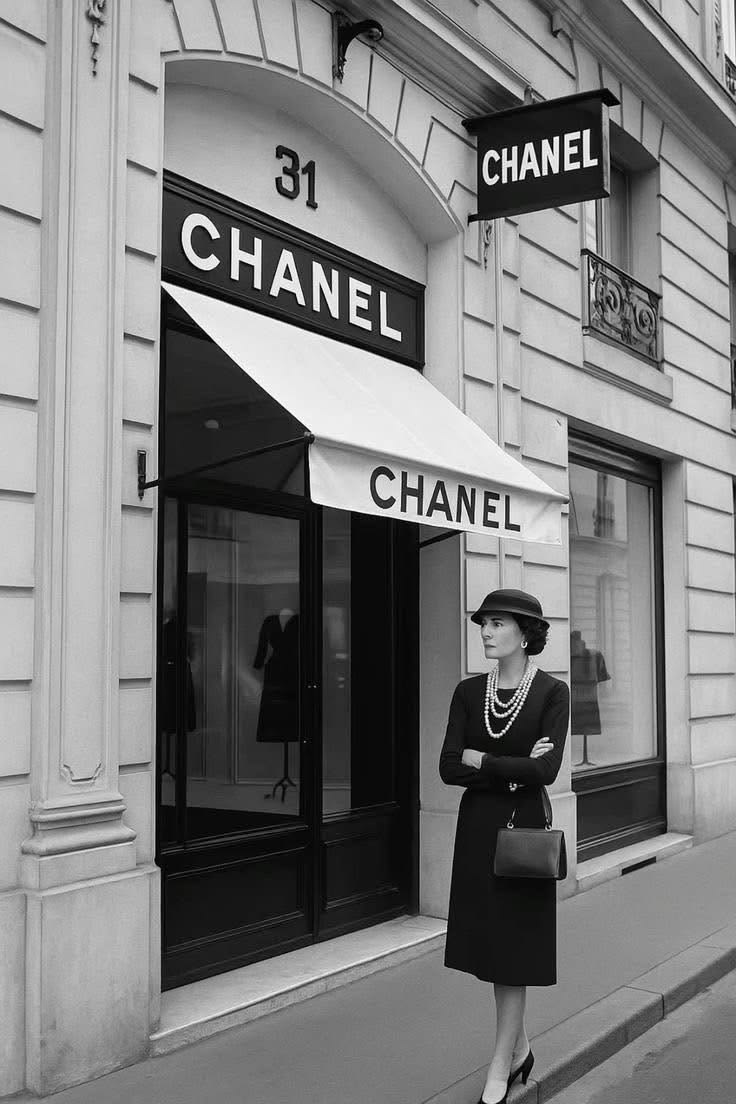
Gabrielle Chanel lived in Paris for more than fifty years and left a geography that can still be walked in an afternoon. The addresses are close together, mostly in the first and eighth arrondissements, and almost none of them are marked.
21 Rue Cambon: the beginning
In 1910 she opened a millinery shop at 21 Rue Cambon. She was not yet a dressmaker, and the lease explicitly forbade her from making clothes, because an established couturier in the same building held that right.
Hats mattered more than the modest beginning suggests. The period style was enormous, heavily decorated and physically burdensome. Her hats were small, plain and light. The reduction that would define her entire career was already visible in a shop that legally could not sell a dress.
Deauville and Biarritz: the detour that mattered
Her first real dress business was not in Paris at all. She opened in Deauville in 1913 and Biarritz in 1915, resort towns where wealthy women were away from formal city dressing and more open to something looser.
It was there she began cutting jersey, a knit fabric then used almost exclusively for men's underwear, into day dresses. The fabric was cheap, available during wartime shortage, and it moved with the body. The strategic insight was that novelty is easier to sell to people on holiday.
31 Rue Cambon: the house
She took number 31 in 1918, and it remains the address most associated with her.
The structure of the building explains the structure of her business. Boutique on the ground floor. Her apartment above, where she received but never slept. Ateliers above that. And the mirrored staircase connecting them, from which she watched collections being shown while remaining out of view.
The apartment is filled with Coromandel screens, wheat sheaves, lions and no bed. She kept the whole vertical chain, from workroom to client, inside one narrow building.
She controlled everything except the room she slept in, and that she deliberately placed elsewhere.
The Ritz, Place Vendôme
She lived at the Ritz for more than thirty years, in a suite a two-minute walk from Rue Cambon. She died there in 1971, on a Sunday, having worked that day.
The choice was characteristic. A hotel is serviced, anonymous and impermanent. She had grown up in an orphanage and appears never to have wanted a domestic household of her own.
The closure and the return
She closed the house in 1939 at the outbreak of war and did not reopen until 1954, at seventy-one years old.
The comeback collection was received badly in Paris, where the press found it dated against Dior's structured silhouette. American buyers disagreed and bought heavily. The suit that followed, in soft bouclé, with a chain weighted into the hem so the jacket hung correctly, became one of the most copied garments of the twentieth century.
The French verdict was reversed within three years.
Walking it
The core addresses sit within a compact area between the Tuileries, the Place Vendôme and the Rue Cambon. On foot, unhurried, the sequence takes about half a day.
What the pavement will not tell you is which window belonged to which atelier, where the staircase sits, or why a resort town in Normandy mattered more to fashion history than most Paris streets.
That context is the subject of our guided fashion history tours, led on site by a fashion historian, in English or French.
Dates are available here.
Mademoiselle C
Author