Films to Watch When You Love Fashion and Paris: A Cinephile's Guide
A cinephile's guide to the best films about fashion and Paris : from Godard's New Wave to Bonello's Saint Laurent. Costume designers, filming locations, and the stories behind the seams.
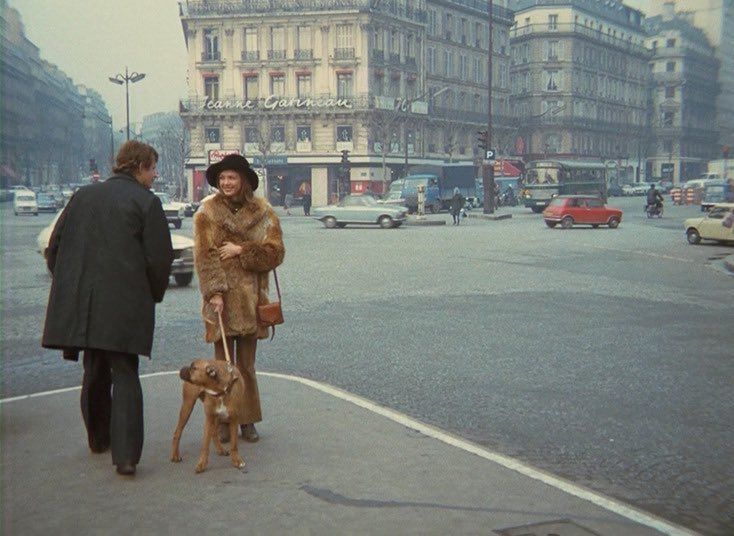
This is a list for people who understand that costume in cinema is not decoration : it is language. A garment in a film by Godard or Buñuel or Varda does not simply clothe a character. It constructs them. It tells you who they are, what they fear, what they pretend to be, and what they are becoming. Costume design, at its highest level, is screenwriting in fabric.
And Paris? Paris is not a backdrop in these films. It is a character. The streets, the cafés, the museums, the ateliers : they breathe through the camera the way a model breathes through a garment. These 6 films understand that Paris and fashion are inseparable, and that cinema is the medium where that relationship has been most fully explored.
As an art historian who spends her days reading paintings for their garment archives, I approach films the same way. I read the seams. I trace the silhouettes. I look for the costume designer's name in the credits the way other people look for the director's. What follows is my cinephile's guide to six films where fashion, Paris, and cinema converge : with the costume designers, filming locations, and behind-the-scenes stories that make them essential viewing.
1. Breathless (À bout de souffle, 1960) - Jean-Luc Godard
The Film That Made a T-Shirt and Trousers a Revolution
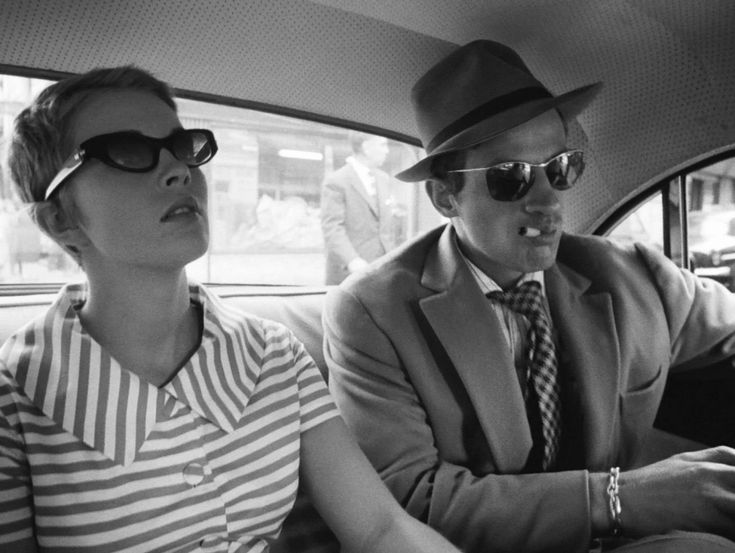
Director: Jean-Luc Godard
Stars: Jean-Paul Belmondo, Jean Seberg
Costume significance: Jean Seberg's Breton-striped top, cropped trousers, and pixie cut didn't just define a character, they defined a decade of fashion.
There is a famous Godard quote: "To make a film all you need is a girl and a gun." The girl was Jean Seberg. The gun was Belmondo's. And the film that resulted - Breathless (À bout de souffle) - didn't just launch the French New Wave. It helped cement it as an international symbol of modern French style.
The story of how Breathless was made is almost as famous as the film itself. Godard shot it in 23 days, from mid-August to mid-September 1959, without filming permits, using a handheld camera and natural light. There was no official script, Godard fed lines to his actors on the spot, sometimes writing them the morning of the shoot. The budget was approximately 400,000 French francs (roughly $80,000), a significant portion of which went to Seberg, already a Hollywood star thanks to Otto Preminger, who took $15,000 for the role.
And yet, from this chaos emerged one of the most influential wardrobes in French cinema history.
Jean Seberg's Patricia, an American journalism student in Paris, wears a white t-shirt, cropped black trousers, and a Breton-striped top that would become as iconic as the film itself. The Breton stripe, originally the uniform of the French Navy (the marinière), had been co-opted by Parisian bohemian culture since the 1930s. But it was Seberg in Breathless who turned it into a fashion statement. The pixie cut, which Seberg had shaved for Preminger's Saint Joan (1957), completed the look: androgynous, effortless, modern. It was the antithesis of the polished Hollywood glamour of the 1950s, and it would influence fashion for the next sixty years.
Where to find the locations in Paris: The film was shot across the city : the Champs-Élysées (where Seberg famously sells the New York Herald Tribune), the streets of Saint-Germain-des-Prés and Montparnasse, and the Hôtel de Suède (Room 12), where the famous bedroom scene : nearly a quarter of the film's running time, was shot with a minimal crew and natural light. Godard himself had lived at the Hôtel de Suède in the early 1950s.
The cinephile's detail: Godard didn't use soundstages or carefully curated sets. He used the city itself : the honking cars, the curious glances of real pedestrians, the grimy walls of back alleys. The film's documentary texture is inseparable from its fashion impact: Seberg's wardrobe looks revolutionary precisely because it's worn in real Paris, not on a set.
2. Cléo from 5 to 7 (Cléo de 5 à 7, 1962) — Agnès Varda
Real-Time Fashion as Emotional Architecture
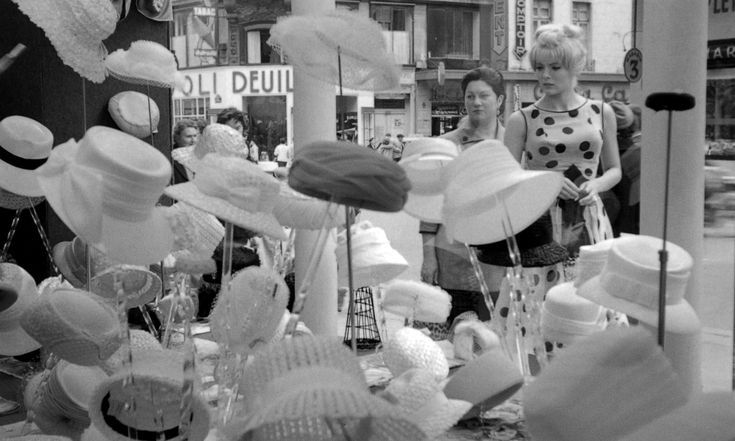
Director: Agnès Varda
Stars: Corinne Marchand, Antoine Bourseiller
Costume significance: Cléo's black dress, fur stole, and sunglasses are not just an outfit. They are armor, and the film is the story of that armor cracking.
If Godard's Breathless made fashion look effortless, Varda's Cléo from 5 to 7 does the opposite: it shows you what fashion costs.
The film unfolds in real time , from 5 p.m. to 6:30 p.m. on June 21, 1961 , as Cléo Victoire (Corinne Marchand), a young and famous Parisian pop singer, wanders the city waiting for the results of a biopsy that may confirm a cancer diagnosis. It is a film about time, anxiety, and the way a woman moves through a city when she believes it might be her last day in it.
And she moves through it in a black dress, a fur stole, dark sunglasses, and a feathered hat : a wardrobe that signals glamour, wealth, and celebrity, but which Varda gradually reveals as a prison. Cléo's clothes are her armor: they protect her from the world, but they also isolate her from it. The sunglasses hide her eyes. The fur stole signals status but also distance. The black dress is elegant but funereal. As the film progresses and Cléo sheds her defenses, literally and metaphorically, her wardrobe becomes the most eloquent element of Varda's storytelling.
Varda, one of the few female directors of the French New Wave, brings a perspective to fashion in cinema that her male contemporaries rarely achieved. She doesn't just photograph clothes, she reads them. She understands that what a woman wears is never neutral, that it is always a negotiation between how she sees herself and how the world sees her.
Where to find the locations in Paris: Cléo's journey can be walked today: from Boulevard Raspail through the cafés and shops of the 1st arrondissement (including chapellerie Francine, 128 rue de Rivoli, where Cléo and her assistant Angèle visit a shop), to the Parc Montsouris, where one the film's mos iconic and transformative scene takes place (BFI; Film Oblivion).
The cinephile's detail: The film features cameos by Jean-Luc Godard and Anna Karina — who appear in a silent film-within-the-film that Cléo watches in a cinema. The score is by Michel Legrand, who also appears in the film as Cléo's accompanist. The film's real-time structure was revolutionary and remains one of the most audacious experiments in cinematic temporality.
3. Belle de Jour (1967) — Luis Buñuel
Yves Saint Laurent and the Birth of the Cinematic Couturier
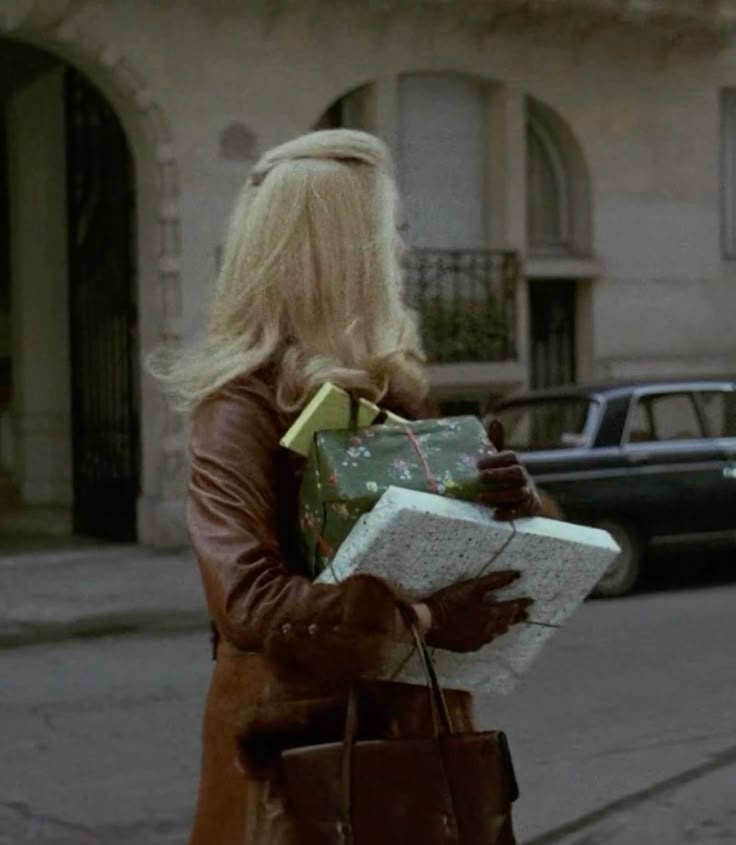
Director: Luis Buñuel
Stars: Catherine Deneuve, Jean Sorel, Michel Piccoli
Costume designer: Yves Saint Laurent (wardrobe overseen by Hélène Nourry)
!! TW : sxual content alert readers or viewers to explicit scenes, non-consensual acts, or themes related to sxual trauma.
If there is a single film that changed the relationship between fashion and cinema forever, it is Belle de Jour.
Luis Buñuel's 1967 surrealist erotic drama, based on the 1928 novel by Joseph Kessel, tells the story of Séverine Serizy (Catherine Deneuve), a young, frigid bourgeois housewife who spends her afternoons working in a high-class Parisian brothel. The film is a masterpiece of surrealism, desire, and psychological ambiguity. But it is also, just as crucially, a masterpiece of costume design.
Yves Saint Laurent personally designed Catherine Deneuve's entire wardrobe for the film, a collaboration that began when Deneuve, after meeting Saint Laurent in 1965, asked him to create all her looks for the role.
The wardrobe is a masterclass in sartorial duality. Séverine's day clothes, the tailored sheaths, the day coats, the crocodile handbags : signal bourgeois respectability. But there is something rigid about them, something constrained. The clothes are perfect, and that perfection is the problem. They represent the prison of Séverine's social identity. When she enters the brothel, the wardrobe shifts: looser silhouettes, more revealing cuts, a different relationship between fabric and body. Saint Laurent's designs don't just dress Séverine, they map her psychological split.
As an academic study published in Création collective au cinéma notes, Saint Laurent's costumes functioned as a mediator between Deneuve and Buñuel, with "several versions of Deneuve's role coexisting" through the couturier's creations.
The collaboration marked the beginning of one of fashion and cinema's most enduring partnerships. Deneuve became one of Saint Laurent's most devoted muses, and the costumes from Belle de Jour are now exhibited at the Musée Yves Saint Laurent Paris : including the famous short dress and the black vinyl coat that became instant fashion icons.
Where to find the locations in Paris: The film was shot at several Parisian locations, including Place Albin-Cachot (13th arrondissement), 79 Champs-Élysées (8th arrondissement), and the Chalet de la Grande Cascade in the Bois de Boulogne (16th arrondissement) , the restaurant where Séverine meets Henri Husson, the man who introduces her to the brothel .
The cinephile's detail: The film's title , Belle de Jour evokes a flower that opens during the day while also playing on the expression belle de nuit, a metaphor for Séverine's secret daytime life. Buñuel, famously meticulous and controlling, was heavily involved in the costume decisions, but it was Saint Laurent who gave the film its visual identity. The wardrobe was overseen on set by Hélène Nourry, but the designs were Saint Laurent's personal work.
4. Funny Face (1957) — Stanley Donen
Givenchy, the Louvre, and the Most Beautiful Fashion Shoot in Cinema
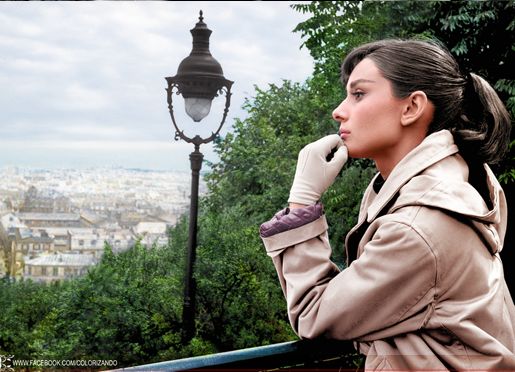
Director: Stanley Donen
Stars: Audrey Hepburn, Fred Astaire, Kay Thompson
Costume designer: Edith Head and Hubert de Givenchy (Givenchy designed Hepburn's Paris couture wardrobe)
Funny Face is a Hollywood musical that has the good taste to be set in Paris, the intelligence to be about fashion photography, and the extraordinary fortune to have Audrey Hepburn wearing Givenchy.
The plot, loosely based on the 1927 George Gershwin musical, follows Jo Stockton (Hepburn), a shy bookshop clerk in Greenwich Village who is discovered by fashion photographer Dick Avery (Fred Astaire) and whisked off to Paris to become the new face of Quality magazine. It is, on the surface, a frothy romantic comedy. But beneath the surface, it is one of the most visually sophisticated fashion films ever made.
Hubert de Givenchy designed Hepburn's couture wardrobe for the Paris transformation sequences, while Edith Head served as the film's principal costume designer. Hubert de Givenchy by designing Hepburn's wardrobe, continued a collaboration that had begun with Sabrina (1954) and would become one of the most famous designer-actress partnerships in history. The wardrobe ranges from casual capri pants and flat shoes (the "beatnik" look that parodies the Left Bank intellectual aesthetic) to the iconic red Givenchy gown with a billowing shawl : worn in the film's most famous sequence, where Hepburn descends the stairs of the Louvre, arms outstretched before the Winged Victory of Samothrace, commanding Astaire to "Take the picture!" .
That single image, Hepburn in red, the Winged Victory behind her, is arguably the most iconic fashion-cinema image ever created. It is also, notably, the image on the Blu-ray cover art, and it has been referenced and homaged in fashion photography for nearly seventy years.
Where to find the locations in Paris: The film transforms Paris into an open-air fashion editorial. Key locations include the Louvre (the Daru staircase, where the Winged Victory stands), the Opéra Garnier (its grand staircase used for a fashion montage), the Champs-Élysées, Montmartre, the Eiffel Tower (setting for the anthological "Bonjour, Paris!" number, shot with aerial views and split-screen technology), and the Tuileries Garden where, incidentally, the Parisian weather did not cooperate, and Hepburn and Astaire can be seen "sloshing around in mud" hidden by diffusion filters.
The cinephile's detail: Fred Astaire was 57 years old during production , thirty years older than Hepburn. The film also features Kay Thompson as magazine editor Maggie Prescott, whose "Think Pink!" number is a satirical hymn to the fashion industry's trend-manufacturing machinery. The famous photo-shoot montage, with a Givenchy-adorned Hepburn posing against Paris landmarks, "sparkles with color and wit" and remains a benchmark for how cinema can frame fashion.
5. Saint Laurent (2014) — Bertrand Bonello
The Biopic That Refuses to Be Hagiography
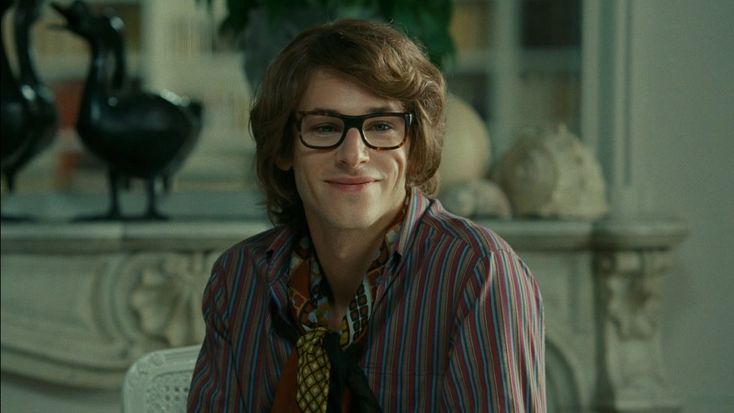
Director: Bertrand Bonello
Stars: Gaspard Ulliel, Jérémie Renier, Louis Garrel, Léa Seydoux
Costume designer: Anaïs Romand
In 2014, two French films about Yves Saint Laurent were released within months of each other. Jalil Lespert's Yves Saint Laurent (with Pierre Niney) was the authorized version, supported by Pierre Bergé. Bertrand Bonello's Saint Laurent (with Gaspard Ulliel) was not.
And paradoxically, that lack of official blessing is part of why I recommend it.
Focusing on the decade 1967–1976 , the period when Saint Laurent was at the peak of his creative powers and simultaneously descending into the excesses that would nearly destroy him : Bonello's film is not a conventional biopic. It is a sensory, non-linear, almost hallucinatory immersion into the mind of a genius. And at its center is a question that every fashion lover should ask: what is the price of beauty?
The costume design by Anaïs Romand is extraordinary in its ambition. A costume department of approximately 12 people was settled in a studio on the outskirts of Paris, where every look was tried, fitted, and styled on each actor before filming began .
But the most remarkable aspect of the film's costume work is its relationship to authenticity. The film recreates two of Saint Laurent's most legendary collections: the "40" collection of January 1971 (the scandalous collection that referenced 1940s occupation-era fashion and provoked outrage) and the Ballets Russes collection of July 1976 , perhaps the most celebrated couture collection of the 20th century.
And here is the cinephile's detail that makes this film essential: Olivier Châtenet, a historic consultant and vintage collector, lent 15 to 20 original YSL looks for each of the main characters from his own personal collection of over 3,000 vintage Yves Saint Laurent pieces. That means when you watch Gaspard Ulliel walk through a scene, some of what he's wearing is not a reproduction — it is an actual Yves Saint Laurent garment, decades old, carrying the history of the house in its seams.
Now, why does this movie matters, for us, fashion historians.
Because Bergé refused to support Bonello's film - preferring the authorized Lespert version - the production could not access the Fondation Pierre Bergé–Yves Saint Laurent archives. And yet, paradoxically, this constraint may have produced a more honest film. As Bonello himself noted, being freed from Bergé's oversight allowed him to paint his own picture of the designer's life — one that includes the drugs, the decadence, and the darkness without which Saint Laurent's beauty cannot be fully understood.
The cinephile's detail: The late Gaspard Ulliel , who tragically passed away in 2022 after a skiing accident , delivers what may be the most physically inhabited performance of a fashion designer ever committed to screen. He doesn't just wear the clothes; he moves through them the way Saint Laurent did: with a mixture of shyness, intensity, and the particular elegance of someone who knows that beauty is both a gift and a burden.
6. Personal Shopper (2016) — Olivier Assayas
Chanel, Ghosts, and the Loneliness of Luxury
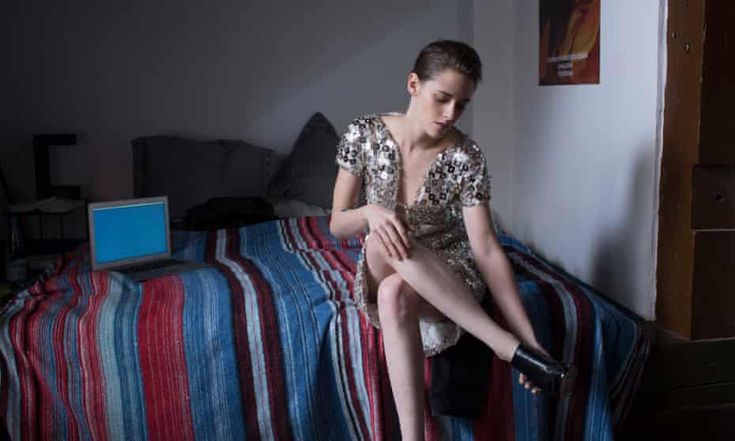
Director: Olivier Assayas
Stars: Kristen Stewart, Lars Eidinger, Sigrid Bouaziz
Costume collaboration: Chanel
I have heard so many times that Olivier Assayas's Personal Shopper is the strangest film ever made about fashion, and that is precisely why it belongs here.
It is, on paper, a supernatural thriller: Maureen (Kristen Stewart), a young American woman living in Paris, works as a personal shopper for a celebrity named Kyra. She buys jewelry, she picks up couture garments, she texts her employer about hemlines and handbags. And she waits for a sign from her twin brother, Lewis, who recently died in Paris, and with whom she had made a pact: whoever died first would send the other a sign from beyond.
What makes Personal Shopper a fashion film is not what it shows but what it understands. It understands the strange, intimate, ghostly relationship between a woman and the clothes she handles for someone else. Maureen touches luxury garments she cannot afford, tries on jewelry that belongs to another woman, inhabits a world of beauty and privilege that is not hers. The film grasps something that most fashion films miss: that fashion, at its most rarefied, can be profoundly lonely.
Chanel provided the costumes for the film — a collaboration that grew out of Kristen Stewart's relationship with the house. Stewart had been a Chanel muse since the Métiers d'Art Paris-Dallas show in 2013, and the house's involvement in Personal Shopper gave the film an authenticity that a generic costume department could not have achieved.
Stewart's performance , which won her the César Award for Best Actress for her previous collaboration with Assayas, Clouds of Sils Maria (2014), making her the first American actress to win a César , is a masterclass in minimalism. She communicates through glances, through the way she handles a garment, through the tension in her shoulders when she tries on someone else's dress. It is a performance that understands fashion not as spectacle but as texture : something you touch, something that touches you.
The cinephile's detail: The film was selected to compete for the Palme d'Or at the 2016 Cannes Film Festival : a remarkable achievement for a film that is, at its core, about a woman who shops for someone else and waits for a ghost. The fact that Cannes took it seriously tells you something about how far the conversation around fashion in cinema has come. Fashion is no longer frivolous. It is a language, and Assayas speaks it fluently.
What These Films Teach Us
Watch these six films in sequence , or better, watch them over a Parisian winter, when the city is grey and the light is low and the cafés are warm , and you will notice something. You will notice that costume design in cinema is not a secondary art. It is not the thing that happens after the script and the casting and the cinematography. It is the thing that makes all of those other things legible.
Jean Seberg's Breton stripes tell you who Patricia is before she speaks a word. Cléo's black dress tells you what she's hiding before she admits it to herself. Séverine's YSL sheath tells you about the prison of bourgeois respectability. Hepburn's red Givenchy gown tells you about transformation. Ulliel's vintage YSL tells you about beauty and its costs. And Stewart's Chanel tells you about the ghostliness of luxury.
These films are not about fashion in the way that The Devil Wears Prada is about fashion : as a subject to be satirized or celebrated. They are about fashion the way that architecture is about space: as a fundamental structuring element of human experience.
That is how I read paintings at the Louvre , sleeve by sleeve, thread by thread. And that is how I watch films. If you love fashion and Paris and cinema, these six films will teach you to see all three differently.
ps. This article was inspired by a question I received from Susan and her friend Deborah, to whom I send my warmest digital hugs !
Sources & Further Reading
- BFI — "In search of the locations for Jean-Luc Godard's Breathless" — Link
- Paris Atlas — "Breathless (1960) — À bout de souffle, Godard's First Feature" — Link
- Movie-Locations.com — "A Bout de Souffle (Breathless) | Film Locations" — Link
- BFI — "60 years of Agnès Varda's Cléo from 5 to 7: how the Paris locations look today" — Link
- Film Oblivion — "Filming Locations — Cléo From 5 to 7 (1962)" — Link
- Cinémathèque française — "Cléo de 5 à 7 (Agnès Varda, 1962)" — Link
- Musée Yves Saint Laurent Paris — "Belle de Jour" — Link
- Aesthetics Film Club — "Belle de Jour: the story of a wardrobe that set a trend" — Link
- OpenEdition Journals — "Retour sur un conflit : les costumes d'Yves Saint Laurent" (2024) — Link
- Vogue France — "Le Musée Yves Saint Laurent Paris expose deux costumes de Belle de Jour" — Link
- Movie-Locations.com — "Filming Locations for Funny Face (1957) in Paris" — Link
- Blu-ray Digest — "Funny Face — Blu-ray News and Reviews" — Link
- Cine-Balade — "Audrey Hepburn in Paris: in the footsteps of her iconic films" — Link
- AFI Silver Theatre — "FUNNY FACE (1957)" — Link
- Hollywood Reporter — "Cannes: How 'Saint Laurent's' Costume Department Dressed Style's Biggest Star" — Link
- 20 Minutes — "Dans les coulisses de la création des costumes du biopic Saint Laurent" — Link
- Bertrand on Brand — "Director Bertrand Bonello and Actor Gaspard Ulliel on Saint Laurent" — Link
- Criterion Collection — "Personal Shopper (2016)" — Link
- Festival de Cannes — "Kristen Stewart, Personal Shopper for Olivier Assayas" — Link
- Vogue India — "Vogue's guide to the best fashion films" — Link
Mademoiselle C
Author