How Paris Became the Fashion Capital of the World
From Louis XIV’s trade policy to Worth’s label and Dior’s New Look: the deliberate, four-century construction of Paris as the centre of fashion.
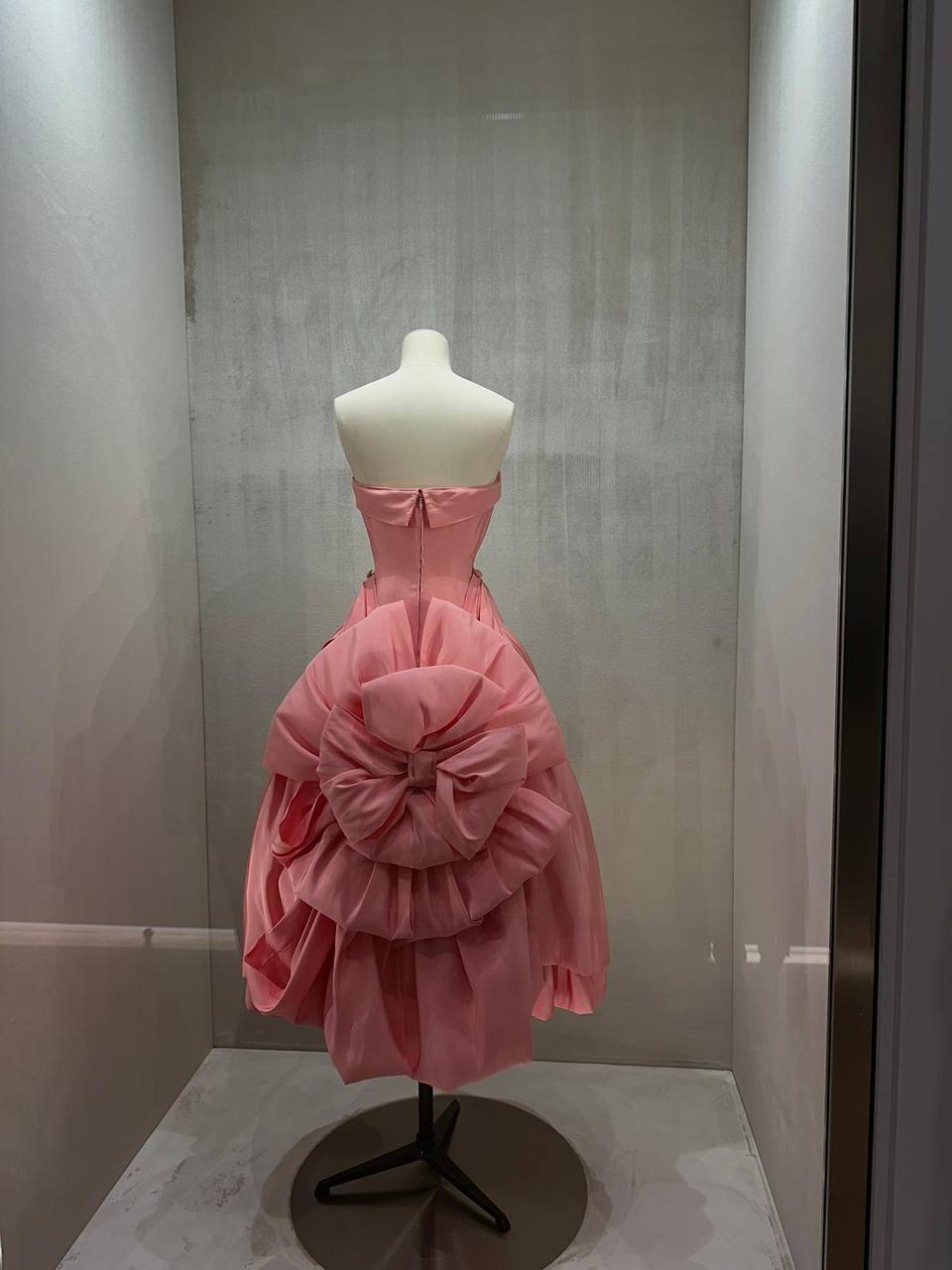
Paris did not become the fashion capital by accident or by taste. It was constructed deliberately, as economic policy, over roughly four centuries, and it has been defended just as deliberately ever since.
The seventeenth century: fashion as state industry
Under Louis XIV, Jean-Baptiste Colbert restructured French manufacturing around luxury exports. Silk weaving at Lyon, lacemaking, mirrors, furniture and dress were all developed as strategic industries with state protection and investment.
Colbert is supposed to have observed that fashion was to France what the gold mines of Peru were to Spain. Whether or not he said it, the policy behaved exactly as though he had.
The court at Versailles then functioned as the marketing arm. Dressing correctly was a condition of political access, which meant the aristocracy of Europe watched what the French court wore and imitated it.
The eighteenth century: the trade press is invented
Fashion dolls dressed in miniature current styles circulated between European courts, followed by engraved fashion plates and then illustrated periodicals.
This is the point at which fashion becomes information rather than merely clothing. A style could now travel faster than the garment itself, and Paris controlled the source.
Once Paris controlled the images, it no longer needed to control the manufacturing.
1858: Worth invents the designer
An Englishman, Charles Frederick Worth, opened at 7 Rue de la Paix and did three things nobody had systematically done.
He sewed his own name into the garment, making the maker rather than the wearer the author. He presented seasonal collections on live models for clients to select from, rather than executing whatever the client requested. And he dictated the silhouette, positioning himself as an authority rather than a supplier.
Every subsequent designer works inside the structure he built.
1868 and 1945: the system is formalised
The Chambre Syndicale was established in 1868 to organise the couture houses, protect designs and coordinate the calendar.
In 1945, in a country rebuilding from occupation, the term haute couture was given legal protection with defined criteria: made-to-order for private clients, a Paris atelier employing full-time staff, and two press collections a year. Fashion was written into French law as a protected industry.
1947: the New Look and the reconquest
The war had genuinely threatened Paris supremacy. New York had gained ground while Europe was closed, and American manufacturers had learned to design without French direction.
Christian Dior's February 1947 collection at 30 Avenue Montaigne answered that with extravagance: sloped shoulders, a compressed waist and skirts consuming enormous quantities of fabric in a country still rationing it.
It was criticised as immoral and was commercially overwhelming. Within two years Paris had recovered its position, and the American press had returned.
The late twentieth century: from couture to conglomerate
As couture clients dwindled to a few thousand worldwide, the economics shifted decisively to ready-to-wear, licensing, fragrance and leather goods.
The houses consolidated into large groups, which then bought up the specialist ateliers, the embroiderers, pleaters and feather workers, explicitly to keep the skills alive. The couture shows became loss-leading demonstrations of capability that sold handbags.
Paris retained the centre not because it makes the most clothing, which it does not, but because it retained the authority to define value.
Reading it on the ground
All of this happened within a walkable area of central Paris. The Rue de la Paix, the Rue Cambon, Avenue Montaigne and Avenue Marceau are a single afternoon on foot, and almost nothing is marked.
Our fashion history tours of Paris follow that development address by address, led by a Sorbonne-trained historian, in small groups, in English or French.
Dates and booking are here.
Mademoiselle C
Author