What Is Haute Couture? The Real Legal Definition
Haute couture is a protected legal term in France with specific criteria. Here is what it actually requires, which houses qualify, and why it matters.
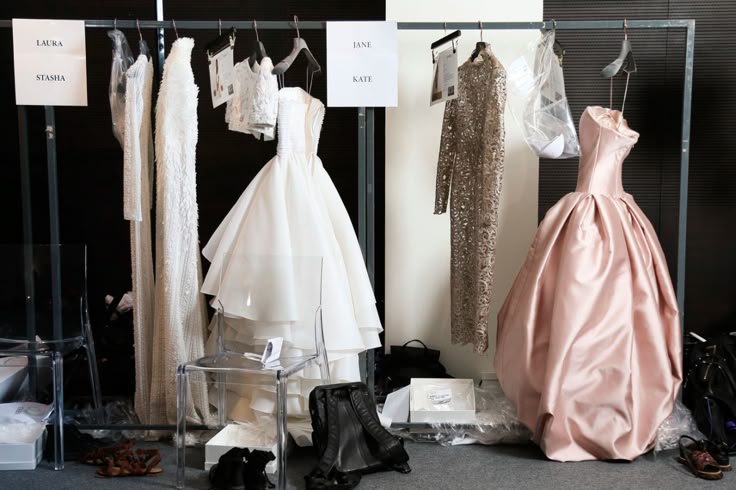
Most people use haute couture to mean expensive or elaborate clothing. In France it is something much narrower: a legally protected designation, administered by a government-linked body, with criteria a house must meet every year to keep it.
The term is protected by law
Since 1945, the phrase haute couture has been regulated in France. A fashion house cannot simply describe itself as couture. The designation is granted by the Fédération de la Haute Couture et de la Mode, under the authority of the French Ministry of Industry, and it must be renewed.
This makes it closer to a controlled agricultural appellation than to a marketing adjective. Champagne works the same way.
What a house must actually do
The core requirements have shifted over the decades, but the essentials have held.
The house must design made-to-order garments for private clients, with one or more fittings on the individual body. Not sized, not adjusted afterwards, but cut for that person.
It must maintain an atelier in Paris employing a minimum number of full-time staff. The figure has been reduced over time as the economics have tightened, but the principle remains: real workrooms, in the city, with salaried hands.
It must present a collection to the press twice a year, in January and July, comprising a minimum number of original designs covering both daywear and evening.
The criteria are about labour and location, not about price. A garment is not couture because it is expensive.
Why the list is so short
Fewer than twenty houses hold full couture status at any given time, and the number of genuine private couture clients worldwide is often estimated in the low thousands.
The economics are brutal. A single embroidered evening piece can absorb hundreds of hours of skilled hand labour. Houses do not run couture at a profit. They run it because it sustains the workrooms, trains the next generation of hands, and generates the image that sells perfume, handbags and cosmetics at volume.
Couture is, in commercial terms, the most expensive advertising in the world.
Guest members and the wider system
Alongside permanent members, the Federation admits guest houses on an invited basis, which allows younger designers to show during couture week without meeting the full permanent criteria.
Surrounding all of it sits an ecosystem of specialist ateliers: embroiderers, feather workers, pleaters, glovemakers, shoemakers. Several were acquired by the large groups specifically to prevent the skills disappearing.
This supply chain is the part visitors never see and the part most at risk.
Couture, ready-to-wear and demi-couture
Ready-to-wear is designed in standard sizes and produced in series. It is where essentially all fashion revenue lives.
Demi-couture has no legal status. It generally describes ready-to-wear made with couture-level handwork, which is a marketing position rather than a category.
Haute couture is the made-to-order, Paris-atelier, twice-yearly-collection definition above, and nothing else legally qualifies.
Where this happened
The couture system was invented on a specific street. Charles Frederick Worth opened at 7 Rue de la Paix in 1858 and established the idea that the designer, not the client, decides what the season looks like. Every element of the modern system descends from that shop.
Our fashion history walking tours trace that development on the ground, from the Rue de la Paix through the great twentieth-century houses, explained by a Sorbonne-trained historian in small groups.
Booking and dates are here.
Mademoiselle C
Author