Where Do Parisian Designers Shop for Vintage? The Puces de Saint-Ouen Flea Market
Where do Parisian designers shop for vintage? Inside Les Puces de Saint-Ouen, the world's largest antique market and Paris's most important fashion archive.
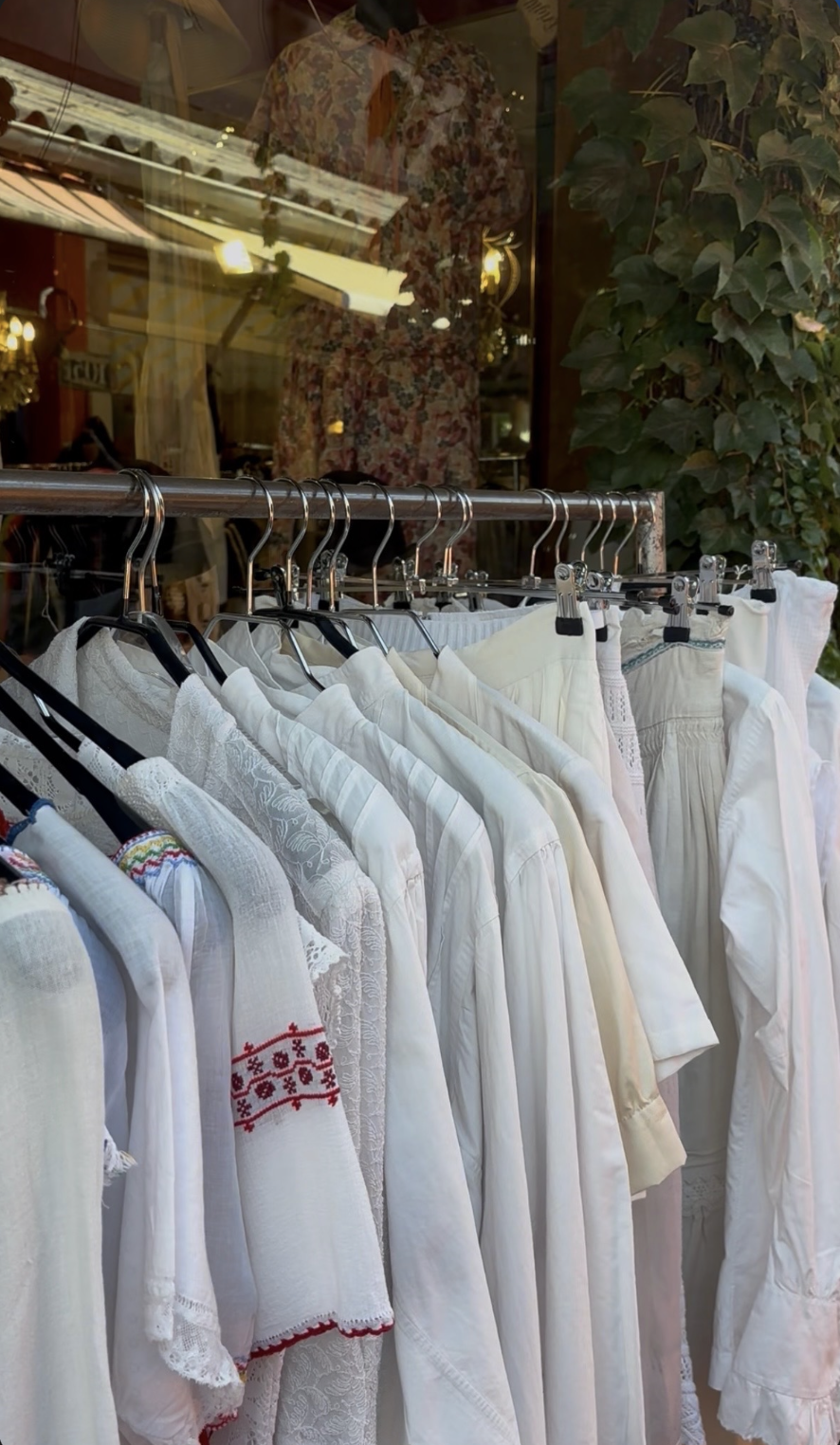
There is a sentence I overheard at Les Puces de Saint-Ouen that I want to begin with, because it contains everything I want to say about this place.
I was standing in AW Cooper, one of the vintage shops tucked into the passages of Marché Vernaison, when a customer walked in and asked the owner for something specific: a slightly oversized, preferably white t-shirt. Philippe , the father of Max, who together run this family business, looked at him and said, with the kind of calm authority that comes from decades of curating rather than selling:
"Ici, tu viens pas en cherchant quelque chose. Tu rentres dans la boutique et tu ressens ce qui t'inspire."
Translation : "Here, you don't come looking for something. You walk into the shop and you feel what inspires you."
That sentence is the essence of Les Puces de Saint-Ouen. And it is the reason I am writing this article.
Because Les Puces is not a vintage department store. It is not a thrift mall. It is not a place where you arrive with a shopping list and leave with a bag. It is a place where the past of every era interacts with the present : where a 19th-century lace collar can speak to a 1990s Helmut Lang blazer, where a Belle Époque dress button can sit beside a pair of American workwear jeans, and where the atmosphere of each stall is as important as the objects within it.
You don't go to Les Puces to find a specific item. You go to be imprinted.
I consider Les Puces de Saint-Ouen to be one of the most important fashion archives in Paris : not behind glass, not in a climate-controlled storage facility, but alive, open, and breathing every weekend from Saturday to Monday.
What follows is my guide to the some of the addresses that matter the most : the shops that understand what Les Puces really is, and that make it the living archive it has always been.
A Brief History: From Waste Pickers to the World's Largest Antique Market
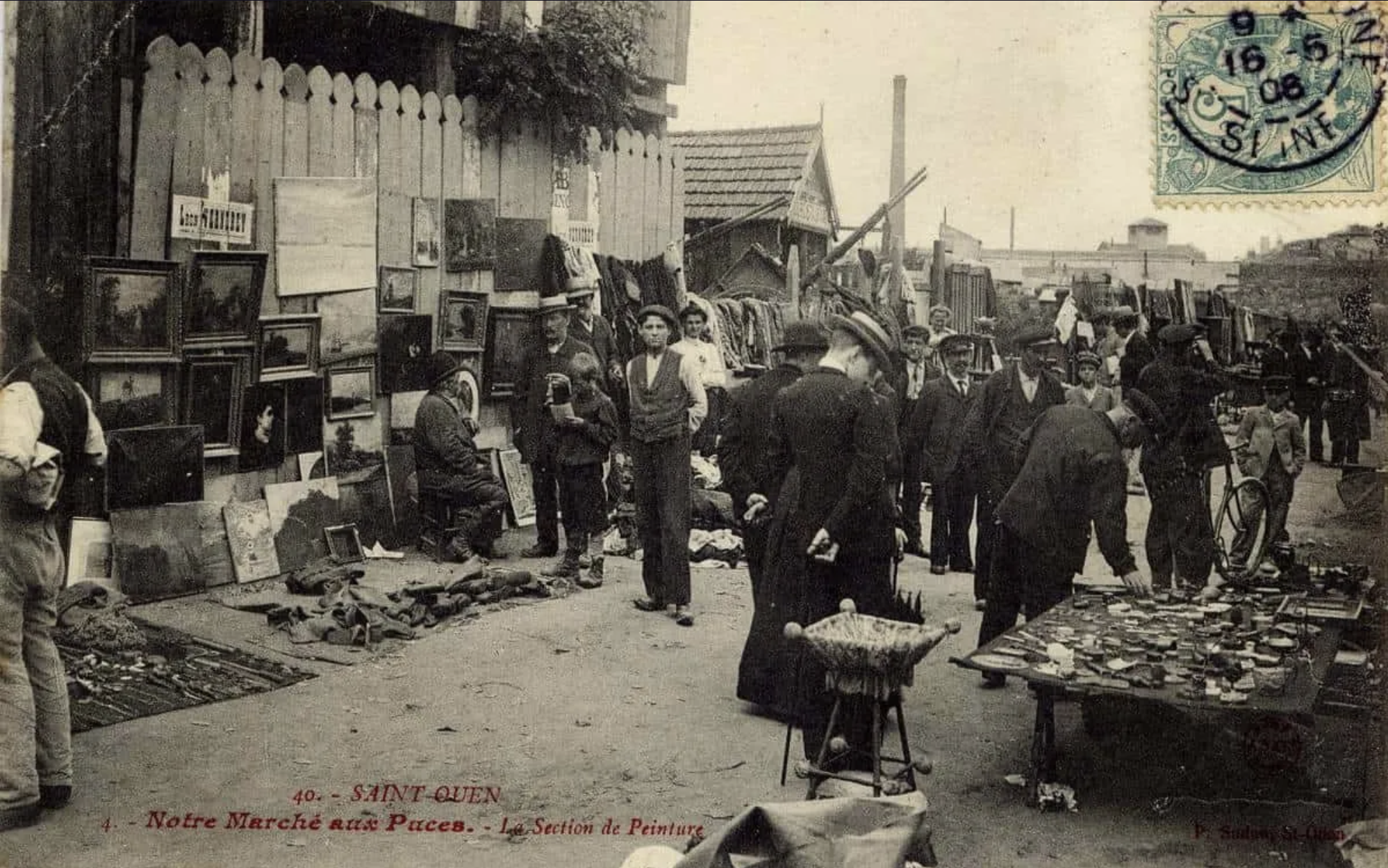
Although ragpickers had already begun settling beyond Paris's fortifications in the 1870s, 1885 is generally regarded as the official birth of Les Puces. Their development coincided with new waste-collection regulations introduced under Prefect Eugène Poubelle, which transformed the way Paris handled its refuse. The market was born at a very specific crossroads of French history: the industrial revolution, Haussmann's major public works that were reshaping Paris, and the universal exhibitions that were drawing the world's attention to the French capital.
Originally, it was the chiffonniers (ragpickers, known at the time as biffins) who kept the market alive. They were the ones who collected the discarded objects that Paris no longer wanted. Among them, there were different specializations: the piqueurs who retrieved objects of interest with their pike and hod; the placiers who, in cahoots with concierges, watched over the tin boxes where residents threw away unwanted objects; and the chineurs who walked around with a two-wheeled cart, collecting what others had discarded (France Culture).
The name marché aux puces , literally, "market of fleas" , dates from this period, reportedly because the secondhand goods were believed to harbor fleas. It was an unglamorous beginning for what would become the largest antique market in the world: around 2,000 dealers spread across more than a dozen markets and approximately seven hectares in the northern outskirts of Paris, near the Porte de Clignancourt (France Culture; Puces de Paris Saint-Ouen official website).
The market began to take its current shape in 1920, with the establishment of the Marché Vernaison : the first sedentary market at Les Puces. This is a detail that matters more than it might seem, because every single shop I am about to describe in this article - AW Cooper, Marcel & Jeannette, Poster Paul - is located in or around Marché Vernaison. When you walk through its alleys today, you are walking through the foundational market of Les Puces, the one that transformed a gathering of ragpickers into the world's largest concentration of antique dealers (France Culture).
What interests me as a fashion historian is not the size, but the trajectory. By the 1920s, the market was already frequented by designers and tastemakers. Coco Chanel is said to have scouted Les Puces for inspiration : a practice that would become a rite of passage for generations of designers to follow. Over the last thirty years, the popular side of the market shifted from selling leather and jackets to sneakers, while a more bourgeois side developed with grand decorator markets offering authentic pieces, passementerie, and second-hand clothing. The market's evolution from a dumping ground for the city's refuse to a destination for the world's most discerning eyes is not a coincidence. It is the story of how discarded objects become valuable when someone with knowledge and vision looks at them differently.
That transformation, from waste to archive, from refuse to resource, is the story of fashion itself. And it is happening at Les Puces every single weekend.
AW Cooper: The Father & Son duo
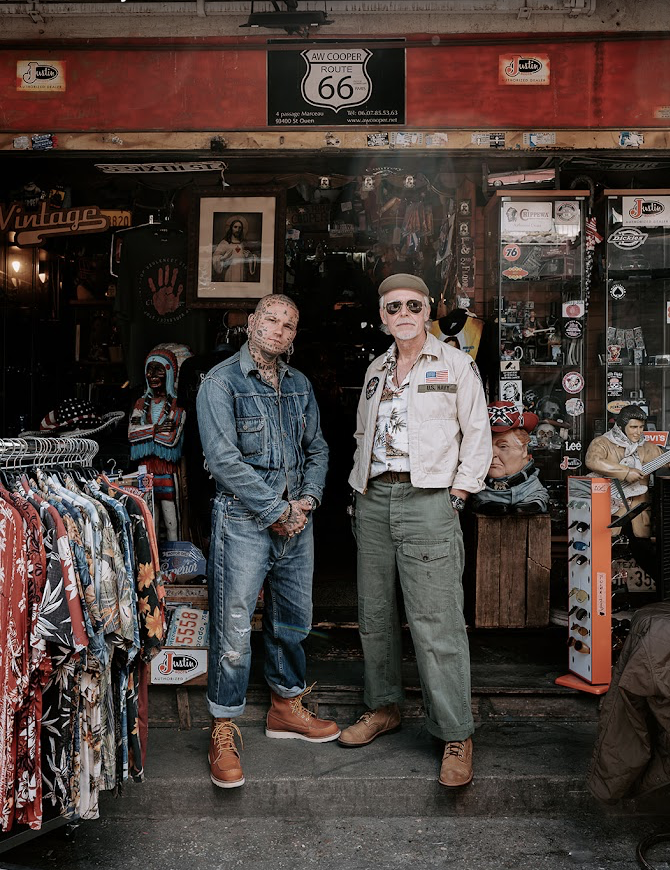
Picture extracted from AW Cooper Google Business' profile
Address: 4 Passage Marceau, 93400 Saint-Ouen (across from Marché Vernaison)
If there is one shop at Les Puces that embodies the philosophy I described at the beginning of this article, it is AW Cooper. Tucked into a passage of the market, this boutique specializes in vintage clothing made in the USA : workwear, denim, military jackets, varsity sweaters, and the kind of rugged American garments that were never designed to be fashionable but have become some of the most sought-after pieces in the vintage world (Gentleman Chemistry; AW Cooper Facebook).
What makes AW Cooper essential is not the inventory (though the inventory is extraordinary). It is the approach. This is not a shop where you browse racks looking for your size. It is a space where you enter, let your eyes adjust, and allow the garments to speak. They understand something that most vintage sellers don't: that vintage is not about categories, it's about atmosphere. A 1950s American work shirt is not interesting because it's a 1950s American work shirt. It's interesting because of the weight of the fabric, the way the collar sits, the particular fade of the indigo : details that you cannot search for, but that you recognize when you see them.
And AW Cooper is not just a destination for vintage enthusiasts. In a video shared on AW Cooper's Instagram, Max explains that Isabel Marant (the woman who fuels the contemporary Parisian bohemian aesthetic) comes to the shop to hunt for vintage pieces. This is not shopping. This is research. This is a designer returning to the source material of fashion (the actual garments that were worn, lived in, and shaped by time) to feed her own creative process.
The anecdote I overheard (Philippe telling the customer that you don't come here looking for something, you come to feel what inspires you) is not a rejection. It is an invitation. An invitation to approach vintage the way a designer does: not as a consumer, but as an observer. Not with a list, but with open eyes.
Marcel & Jeannette: Where the 18th Century Still Breathes
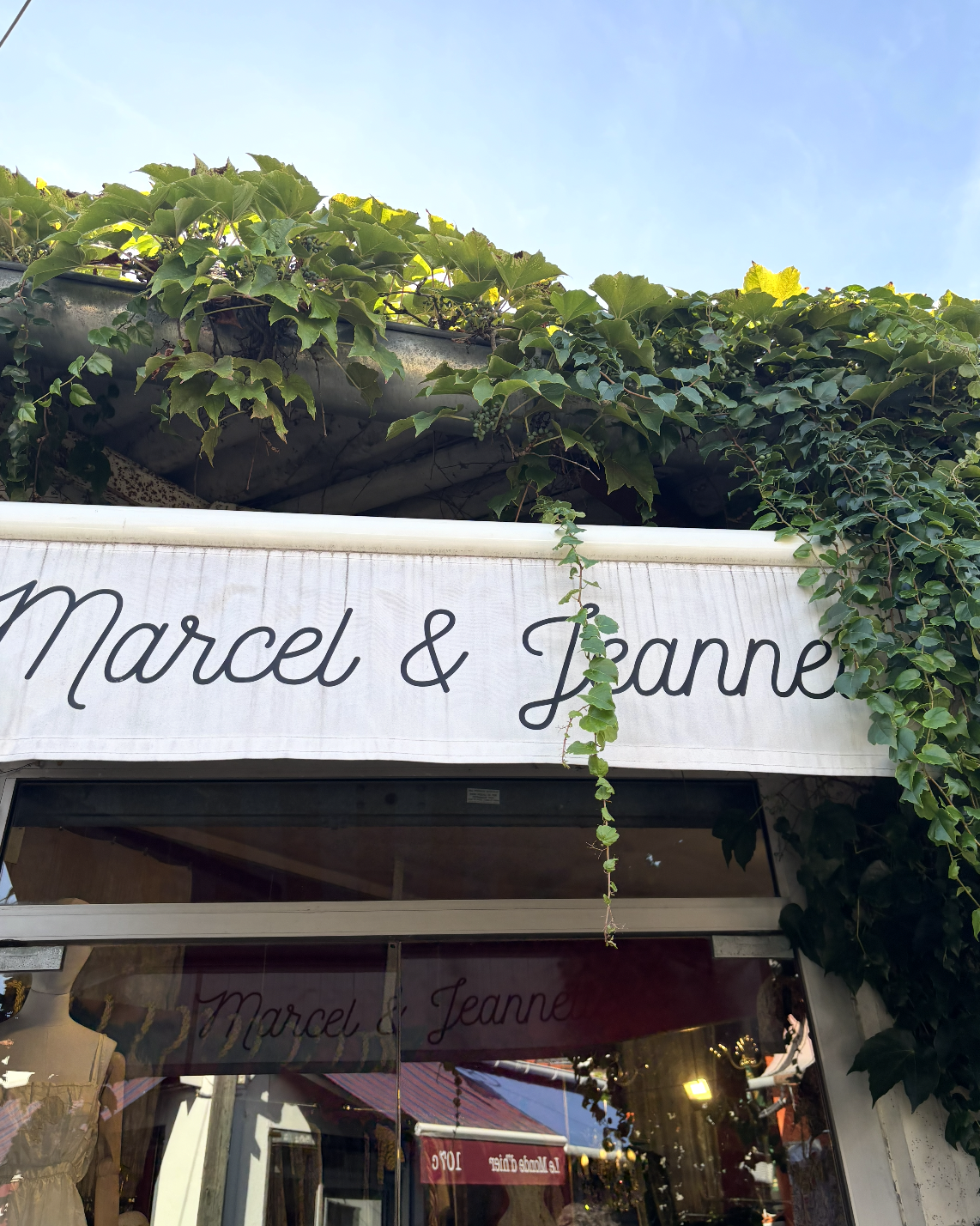
Address: 99 rue des Rosiers, Marché Vernaison, Stands 108 & 118 (Allée 3 & Allée 6), 93400 Saint-Ouen
If AW Cooper represents the rugged, American side of vintage, Marcel & Jeannette represents its opposite: the delicate, European, deeply historical side. And when I say historical, I don't mean the 1980s. I mean centuries old.
Marcel & Jeannette, run by Virginie Chorro and Merry Liuzzo, offers a collection of dresses ranging from the 18th century to the 1960s , a span of over two hundred years of fashion history, hanging on racks that you can actually touch (Marcel & Jeannette official website). This is not a museum. There is no glass. There is no security guard telling you not to get too close. There is a Belle Époque dress that you can examine at arm's length, and a collection of period buttons, vintage lace, and haberdashery that functions as a working archive for designers, costume makers, and fashion historians.
The shop is, in essence, a period haberdashery : a place where the small, functional, often overlooked components of historical dress survive. Buttons are one of the most undervalued elements of fashion history. They tell you about manufacturing techniques, about trade routes, about the hierarchy of dress. And at Marcel & Jeannette, you can hold them in your hand (with gentle care of course!).
Poster Paul: Where John Galliano Came to Dream
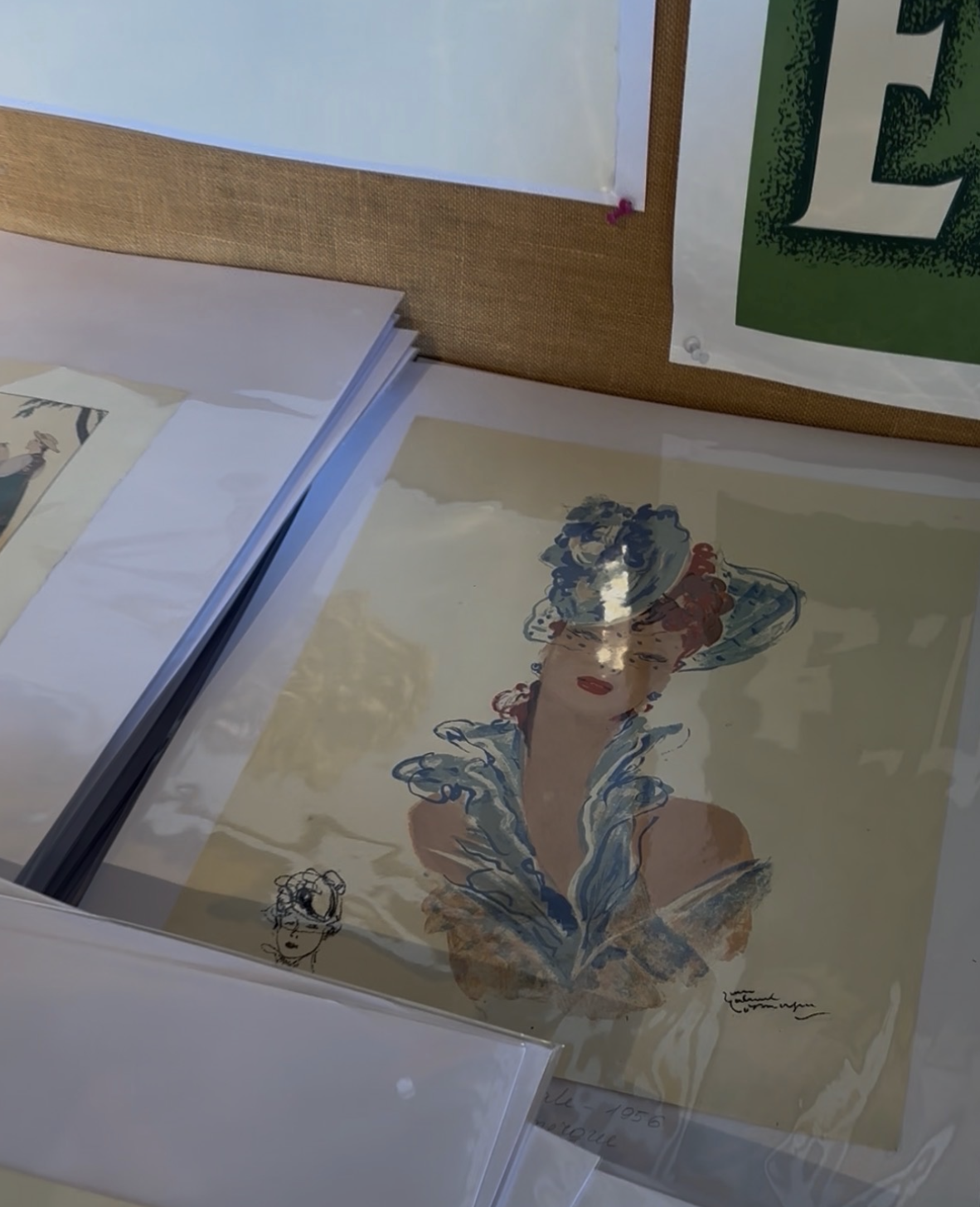
Address: Marché Vernaison, Allée 1, Stand 41, 93400 Saint-Ouen
Of all the shops I visited at Les Puces, Poster Paul is the one that left the deepest impression on me.
Poster Paul (officially the Galerie Paul Maurel) is a vintage poster gallery located in Marché Vernaison, specializing in original vintage posters, lithographs, and geographical maps dating from the end of the 19th century to the end of the 20th century. The family business traces its history to Galerie Isabelle Maurel, founded in Paris in 1974; Galerie Paul Maurel succeeded it in 1987. It is a member of the International Vintage Poster Dealers Association (IVPDA), whose members adhere to standards concerning authenticity and professional practice. (Poster Paul official website; IVPDA; Tourisme 93).
But the posters, extraordinary as they are, are not the reason I'm writing about Poster Paul. The reason is a conversation I had the privilege of having with Mariana Maurel, Paul's wife, who runs the gallery alongside him. And what she told me was extraordinary.
She told me about John Galliano (one of the most visionary and controversial designers in fashion history) coming to Poster Paul to seek inspiration in the archives. Not to buy posters for a collection, not to copy them, but to immerse himself in the visual culture of another era. To look at the typography, the color palettes, the compositions, the way a 1950s poster communicated desire, and to let that feed his own creative process.
This is what Les Puces does for designers. It is not a supplier. It is an archive. A moodboard made physical. A place where the visual languages of the past are preserved not as artifacts but as living resources, available to anyone with the eyes to see them and the imagination to translate them into something new.
Mariana told me other stories too, stories I won't share here, because some conversations are meant to stay in the space where they happened. If you want to hear them, you'll have to visit Poster Paul yourself. Stand in the gallery, look at the posters, and ask. That's how it works at Les Puces. The objects are the invitation. The stories are the reward.
What Les Puces Really Is
I want to end where I began, with the idea that Les Puces de Saint-Ouen is not a vintage department store.
A vintage department store is a place where objects are organized by category, priced by trend, and consumed by desire. Les Puces is the opposite. It is a place where objects are organized by the logic of individual curators : each stall a personal archive, each shop a worldview. It is a place where pricing reflects not trends but the irreplaceable nature of things that have survived. And it is a place where consumption is the least interesting thing you can do.
The Puces de Saint-Ouen is the largest antique market in the world. But that fact, while true, misses the point. It is also the most important open-air fashion archive in Paris. For generations, the Puces have drawn designers and creative figures. Coco Chanel is among those traditionally said to have frequented the market; at Poster Paul, Marianne Maurel remembers John Galliano visiting the gallery for inspiration; and dealers today still describe contemporary designers as regular visitors.
The owner of AW Cooper was right. You don't come here looking for something. You come to feel what inspires you. And if you let it, Les Puces will change the way you see fashion, history, and the relationship between the two.
Practical Information
Les Puces de Paris Saint-Ouen
Address: Rue des Rosiers, 93400 Saint-Ouen-sur-Seine
Metro: Porte de Clignancourt (Line 4), Garibaldi (Line 13), Saint-Ouen (Line 14)
Hours: Saturday 10:00–18:00, Sunday 10:00–18:00, Monday 11:00–17:00 (some shops closed Monday)
Official website: pucesdeparissaintouen.com
My advice: Don't plan your visit around a shopping list. Plan it around time. Give yourself a full day. Wander. Get lost. Step into shops that don't look like anything from the outside. Talk to the vendors : they are curators, historians, and often the most interesting people you will meet in Paris. And when you find something that moves you, that makes you look differently at a garment, a poster, a button : buy it. Not because you need it, but because it has taught you something.
That is what Les Puces is for.
Sources & Further Reading
- Puces de Paris Saint-Ouen — Official website — Link
- Wikipedia — "Saint-Ouen flea market" — Link
- Paris Vibes — "Paris Vintage Shopping & Flea Markets: The Ultimate Guide" — Link
- Visit Paris Region — "Paris Saint-Ouen flea market" — Link
- One Journey Tour — "Saint-Ouen Flea Market Guide" — Link
- Gentleman Chemistry — "AW Cooper, The Flea Market Pirate" — Link
- AW Cooper — Official Facebook page — Link
- Marcel & Jeannette — Official website — Link
- Do It In Paris — "Puces de Saint-Ouen: mode d'emploi" — Link
- Fox and Fire — "Visite du marché aux Puces de Saint-Ouen" — Link
- Poster Paul — Official website — Link
- IVPDA — "Galerie Paul Maurel" — Link
- Tourisme 93 — "Collectible vintage posters at Paris St Ouen Flea market" — Link
- Vogue — "An Insider's Guide to Navigating the Marché aux Puces de Saint-Ouen" — Link
- Goop — "Marché aux Puces Saint-Ouen de Clignancourt" — Link
Mademoiselle C
Author